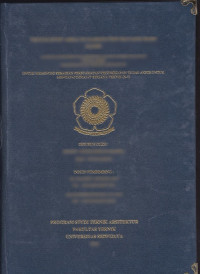
Skripsi
FABRIKASI MATERIAL BIOFOAM BERBAHAN DASAR AMPAS TEBU DAN RHIZOPUS OLIGOSPORUS (RAGI TEMPE)
Penilaian
0,0
dari 5Styrofoam as a practical alternative to food packaging is very useful. In addition to its practicality, the use of conventional plastics such as Styrofoam is still suitable for packaging with a relatively long shelf life such as meat. However, Styrofoam has a disadvantage, due to the large number of Styrofoam uses, it causes a buildup of waste that is very difficult to decompose. Biofoam is an alternative material for food packaging to replace Styrofoam that is environmentally friendly. Made from vegetable fibre that is easily decomposed by microbes, it is an alternative that needs to be considered. This study aims to analyse the effect of polyvinyl alcohol (PVA) variation in the manufacture of biofoam made from bagasse and Rhizopus oligosporus (tempeh yeast) on density, water absorption, biodegradation, and surface morphology. The biofoam manufacturing stage begins with the manufacture of bagasse fibre and continues with biofoam moulding using the baking process method. The manufacture of biofoam consists of 4 variations of PVA (2%, 4%, 5%, 6%). In the research data, desity testing using Archimedes theory, biofoam with 6% PVA variation has the highest value of 1.08 g/〖cm〗^3. In the water absorption test, the 6% PVA variation has the best result of 15%. While the 2% PVA variation sample has the fastest biodegradation rate of 85% within 3 weeks. Observation of the microstructure of the biofoam surface using a scanning electron microscope (SEM) showed an uneven surface due to inhomogeneous material, and also the presence of granules due to the gelatination process
Availability
| Inventory Code | Barcode | Call Number | Location | Status |
|---|---|---|---|---|
| 2407005398 | T156257 | T1562572024 | Central Library (References) | Available but not for loan - Not for Loan |
Detail Information
- Series Title
-
-
- Call Number
-
T1562572024
- Publisher
- Indralaya : Prodi Teknik Mesin, Fakultas Teknik Universitas Sriwijaya., 2024
- Collation
-
xxix, 55 hlm.; ilus.; tab, 29 cm.
- Language
-
Indonesia
- ISBN/ISSN
-
-
- Classification
-
620.117 0 7
- Content Type
-
Text
- Media Type
-
unmediated
- Carrier Type
-
other (computer)
- Edition
-
-
- Subject(s)
- Specific Detail Info
-
-
- Statement of Responsibility
-
SEW
Other version/related
No other version available
File Attachment
Comments
You must be logged in to post a comment
 Computer Science, Information & General Works
  Philosophy & Psychology
  Religion
  Social Sciences
  Language
  Pure Science
  Applied Sciences
  Art & Recreation
  Literature
  History & Geography