Skripsi
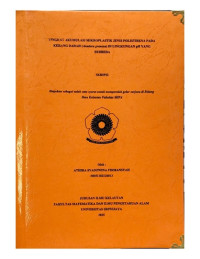
TINGKAT AKUMULASI MIKROPLASTIK JENIS POLISTIRENA PADA KERANG DARAH (ANADARA GRANOSA) DI LINGKUNGAN pH YANG BERBEDA
Penilaian
0,0
dari 5Microplastics are plastic particles smaller than 5 mm that are commonly found in aquatic environments and have the potential to enter the bodies of aquatic organisms, including blood clams. This study aims to analyze the accumulation levels of polystyrene (PS) microplastics in blood clams with condition of different pH levels (6.7 and 9) and two different particle sizes (20 and 150 mikron). The study was conducted over 1, 3, and 5 days with a microplastic concentration of 1 × 10⁴ particles/L. Blood clam samples were collected by dissolving the soft body tissue in 30 persent H₂O₂ for 4 hours at 65 celcius to accelerate tissue degradation, then diluted with 80 mL of NaCl and filtered using 0.45 mikron Millipore paper. The number of particles was counted using a Trinocular Digital Microscope with LCD (TE2500) at 4x magnification. The results showed that microplastics of 20 mikron in size accumulated in the range of 360–689 particles/individual, which was higher than microplastics of 150 mikron in size, which accumulated 365–529 particles/individual. The highest accumulation occurred at pH 7 (neutral), while the lowest accumulation occurred at pH 6 (acidic), and slightly higher at pH 9 (alkaline). Longer exposure duration can also increase the number of accumulated particles. Data analysis was performed using a Three-way ANOVA test followed by a Tukey Post-hoc test to examine the effects and interactions between microplastic size, pH, and exposure duration on accumulation levels. Keywords: Accumulation, Blood Clam, Microplastic, pH, Polystyrene
Availability
| Inventory Code | Barcode | Call Number | Location | Status |
|---|---|---|---|---|
| 2507005589 | T183758 | T1837582025 | Central Library (Reference) | Available but not for loan - Not for Loan |
Detail Information
- Series Title
-
-
- Call Number
-
T1837582025
- Publisher
- Indralaya : Prodi Ilmu Kelautan, Fakultas Matematika dan Ilmu Pengetahuan Alam Universitas Sriwijaya., 2025
- Collation
-
xix, 51 hlm.; ilus,; tab, 29 cm
- Language
-
Indonesia
- ISBN/ISSN
-
-
- Classification
-
577.607
- Content Type
-
Text
- Media Type
-
unmediated
- Carrier Type
-
other (computer)
- Edition
-
-
- Subject(s)
- Specific Detail Info
-
-
- Statement of Responsibility
-
SEPTA
Other version/related
File Attachment
Comments
You must be logged in to post a comment
 Computer Science, Information & General Works
  Philosophy & Psychology
  Religion
  Social Sciences
  Language
  Pure Science
  Applied Sciences
  Art & Recreation
  Literature
  History & Geography