Text
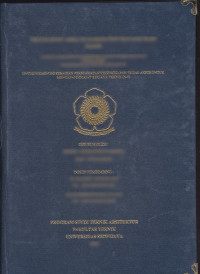
ANALISIS PERUBAHAN SUHU PENCAMPURAN DAN SUHU PEMADATAN PADA HOTMIX AC-WC MENGGUNAKAN LIMBAH FLY ASH DAN BOTTOM ASH PLTU BUKIT ASAM DENGAN VARIASI ASPAL MINYAK DAN ASPAL KARET
Penilaian
0,0
dari 5The coal production in Indonesia reached 710 million tons in 2024. The combustion of coal produces ±5% of solid pollutants in the form of ash (fly ash and bottom ash). In 2021, the government issued Government Regulation No. 22 of 2021 concerning the Implementation of Environmental Protection and Management (PP 22/2021) and the Minister of Environment and Forestry Regulation No. 6 of 2021, which states that fly ash and bottom ash from coal-fired power plants (PLTU) are classified as waste but not hazardous and toxic waste (B3). The utilization of FABA (Fly Ash and Bottom Ash) waste from PLTU, given the large amount of waste and its non-B3 classification, requires alternative materials to replace road pavement materials. In this case, fly ash is used as a filler replacement and bottom ash as a replacement for sand (fine aggregate). Variations in mixing temperature and compaction temperature are conducted to obtain the optimal performance of the hotmix AC-WC mixture through Marshall characteristics. The results of Marshall testing showed that the mixture of AC-WC with fly ash and bottom ash from PLTU Banjarsari, using SIR-20 rubber asphalt, produced the most optimal stability value and Marshall Quotient (MQ) at a mixing temperature of 165°C and a compaction temperature of 154°C. The values of Stability, VFA, and MQ tend to increase as the mixing and compaction temperatures rise, while VIM and VMA tend to decrease with the increase in mixing and compaction temperatures.
Availability
| Inventory Code | Barcode | Call Number | Location | Status |
|---|---|---|---|---|
| 2507001955 | T169821 | T1698212025 | Central Library (Reference) | Available but not for loan - Not for Loan |
Detail Information
- Series Title
-
-
- Call Number
-
T1698212025
- Publisher
- : Prodi Teknik Sipil, Fakultas Teknik Universitas Sriwijaya., 2025
- Collation
-
xiii, 76 hlm.; tab.; 29 cm.
- Language
-
Indonesia
- ISBN/ISSN
-
-
- Classification
-
624.07
- Content Type
-
-
- Media Type
-
-
- Carrier Type
-
-
- Edition
-
-
- Subject(s)
- Specific Detail Info
-
-
- Statement of Responsibility
-
EM
Other version/related
No other version available
File Attachment
Comments
You must be logged in to post a comment
 Computer Science, Information & General Works
  Philosophy & Psychology
  Religion
  Social Sciences
  Language
  Pure Science
  Applied Sciences
  Art & Recreation
  Literature
  History & Geography